Why Slow Burn Is the Heartbeat of Lesbian Romance
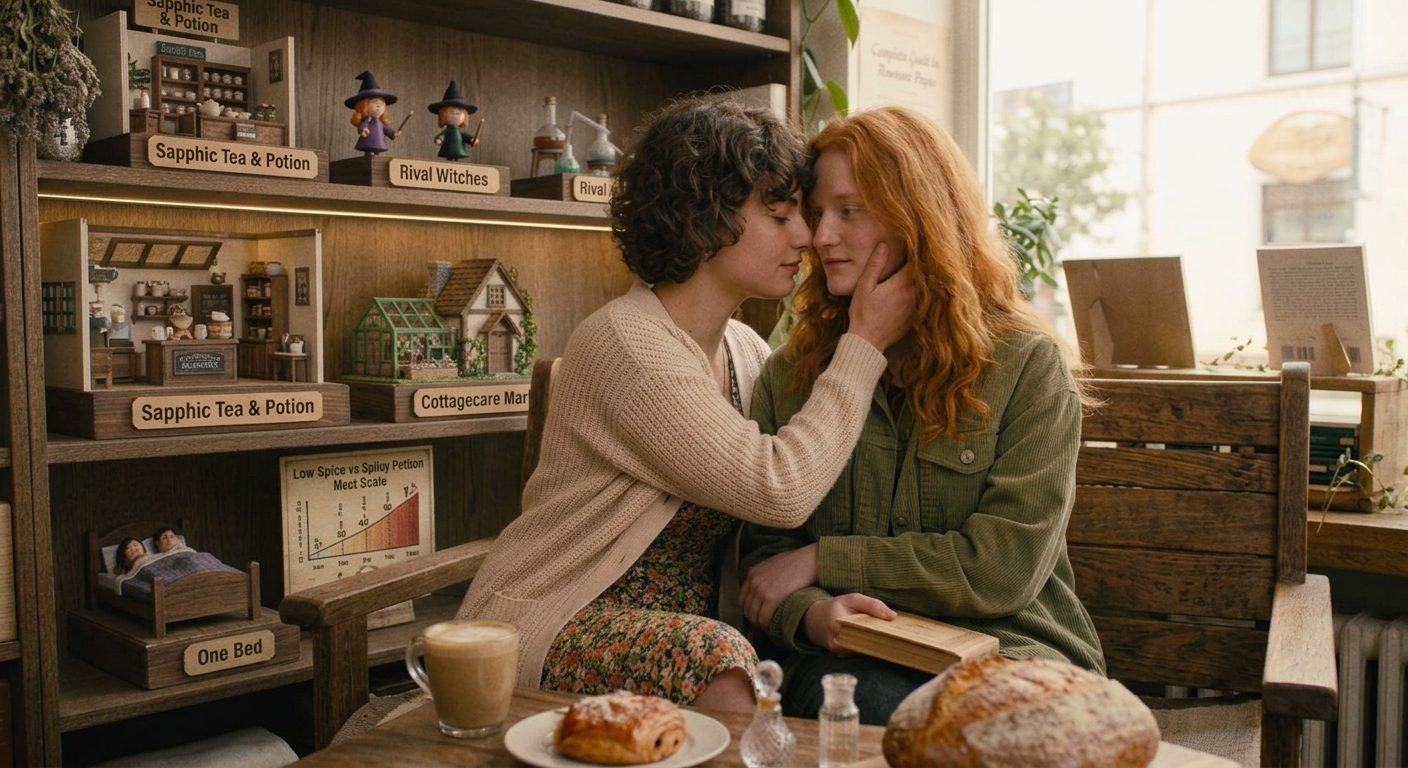
Quick answer: For a cosy slow burn with low drama, read Mending Defects by Lynn Galli. For an aching one, If I Don’t Ask by E.J. Noyes. For slow burn with high heat when it finally arrives, At First Glance by Melissa Tereze. For fantasy, A Sweet Sting of Salt by Rose Sutherland or Compass Rose by Anna Burke. Each card notes heat and the most common reader complaint, so you know how long the wait is and what it pays off with.
Disclosure: this blog and Lesbian Romance Reads (LRR) are run by the same team. Every book below links to its full LRR review, where heat, angst and content notes were checked.
A slow burn romance does not rush to the kiss. It lets a look linger, makes a shared joke feel dangerous, and turns an ordinary text message into an event. The pleasure is not in waiting for nothing to happen. It is in watching two people become important to each other before either is ready to say why.
In lesbian romance, slow burn often carries a special charge. The characters may have known each other for years. They may be friends who have become each other’s safest place. They may be working side by side, returning to the same small town, sharing a team, or circling a truth that feels bigger than either of them expected. The romance does not arrive as a sudden plot twist; it gathers meaning through attention.
What makes a slow burn work
A true slow burn is not simply a book where the characters delay getting together. It needs progression. The characters must learn something about each other, change their behavior, make increasingly vulnerable choices, and reach a point where staying only friends becomes more difficult than risking honesty. Every small step should alter the emotional landscape.
The best slow burns give readers evidence long before the characters have language for what is happening. A heroine remembers exactly how her friend takes her coffee. Someone becomes unexpectedly protective. A supposedly casual touch becomes a moment both women replay later. The story trusts the reader to recognize the emotional shift before the characters do.
Why it fits sapphic romance so naturally
Many lesbian romances use friendship, community, work, and shared history as the foundation for attraction. Those elements give a slow burn texture. A relationship can develop through a weekly book club, a shift at a café, a community project, a sports season, or years of being the person who always answers the phone.
Slow burn also makes space for identity without making identity the only obstacle. A character might be figuring out what she wants, learning to trust desire, or realizing that the relationship she values most has changed. These stories can be tender because they allow self-knowledge and romantic knowledge to grow together.
Common slow-burn variations
Friends-to-lovers is the obvious version: two women already share affection and discover that it has become something more. Workplace slow burn uses repeated professional contact and the risk of changing a working relationship. Small-town slow burn adds history, family expectations, and a community that notices every shift. Fantasy slow burn may turn magical partnership, travel, or mutual survival into intimacy.
Slow burn also pairs beautifully with grumpy/sunshine. The more guarded character does not transform overnight. Instead, she softens in increments: one honest answer, one moment of help accepted, one invitation that means more than it appears to.
Cosy slow burns
Low drama, kind people, and a long, warm wait.


Aching, emotional slow burns
Longing on every page, often because something real stands between the couple.


Fantasy and historical slow burns
Magic, oceans and centuries add obstacles that a contemporary couple never faces.


Choose slow burn when…
Choose slow burn if you want emotional anticipation, intimate character development, and a relationship that feels built rather than announced. It is ideal for readers who enjoy pining, almost-confessions, and the quiet realization that the most important person in the room has become impossible to ignore.
Skip it when…
Skip slow burn if you need a fast romantic payoff, high physical chemistry from chapter one, or a plot that moves quickly toward an established couple. Slow burn rewards patience. It can be exquisite, but it should not feel like the story has forgotten its own romance.
The lasting power of slow burn is simple: it treats falling in love as a process of noticing. The romance is not only about the moment two women finally name their feelings. It is about all the moments that made naming them inevitable.
FAQ
What is a slow burn romance?
A romance where the couple takes a long time, often most of the book, to get together. The tension builds through small moments before any confession or kiss.
How slow is a slow burn?
It varies. In a cosy slow burn the first kiss may come around the midpoint; in an aching one it may wait until the last quarter. Check the know-first note on each card.
Are there slow burn lesbian romances with low angst?
Yes. Mending Defects and Forever are both low drama. For more, see our list of low-angst slow burn lesbian romance.
Which slow burn sapphic books have high heat?
At First Glance, If I Don’t Ask and Homegrown Magic all reach high heat once the couple gets together. For more, see spicy sapphic romance with plot.
Keep reading: pair slow burn with enemies to lovers or second-chance romance, see every trope in the sapphic romance tropes map, or browse LRR’s slow burn lesbian romance recommendations.


Comments
Post a Comment